Respiratory Science

Breathe
Better.

The Science of Nasal Breathing

Your nose isn't just for smelling — it's a precision-engineered respiratory system with 8 distinct mechanisms that make it vastly superior to mouth breathing.

Explore the Science
Nasal anatomy
90–95% of airborne particles filtered before reaching your lungs
10–20× more nitric oxide delivered via nasal vs. mouth breathing
~100% humidity delivered to the lungs through nasal breathing
Air filtration system
01

Air Filtration System

The nose is the body's first — and most effective — air-cleaning system, operating before any particle reaches your lungs.

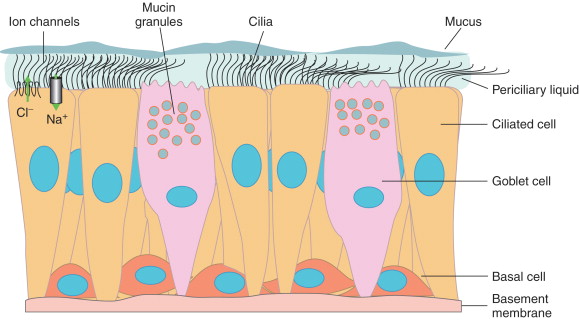
  • Vibrissae (nasal hairs) trap large particles like dust and pollen
  • Sticky mucus layer captures bacteria, viruses, and fine particles
  • Cilia sweep mucus toward the throat for removal
Result: Up to 90–95% of particles removed before air reaches your lungs. The mouth has none of these filtration mechanisms.[1,2]
References
  1. Schwab & Zenkel, Laryngoscope, 1998 (PMID: 9432080)
  2. Proctor, Am Rev Respir Dis, 1977 (PMID: 319718)
Air warming and humidification
02

Air Warming & Humidification

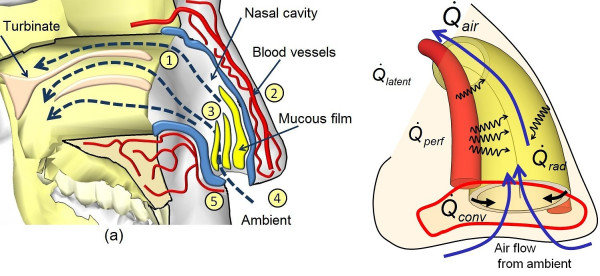
Nasal anatomy conditions incoming air to protect your delicate bronchi and alveoli on every single breath.

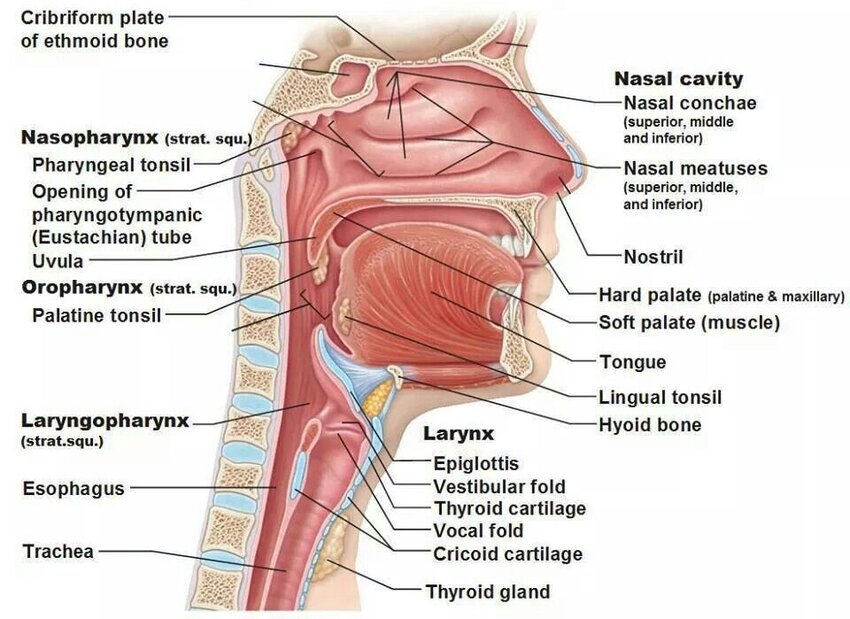
  • Turbinates create turbulence, maximizing air-tissue contact time
  • Dense capillary networks warm air to near body temperature
  • Moist mucosa humidifies inhaled air to near 100%
Why it matters: Cold, dry air irritates and damages lung tissue. Nasal breathing protects your airways on every breath.[1,2]
References
  1. Sommer, Kroger & Lindemann, Rhinology, 2012 (PMID: 22616076)
  2. Newsome et al., Am J Rhinol Allergy, 2019 (PMID: 31291132)
Nitric oxide production
03

Nitric Oxide Production

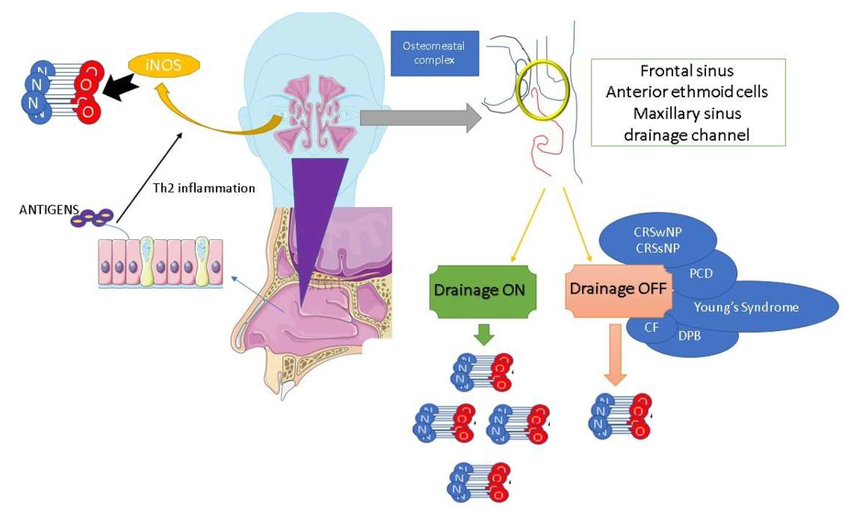
The paranasal sinuses continuously produce nitric oxide (NO), a remarkable molecule that mixes with every nasal breath.

  • Vasodilation in the lungs, dramatically improving oxygen uptake
  • Antimicrobial action directly neutralizing bacteria and viruses
  • Ventilation-perfusion matching for more efficient gas exchange
Key stat: Nasal breathing delivers 10–20× more inhaled nitric oxide than mouth breathing. This molecule does not reach the lungs when you breathe through your mouth.[1,2,3]
References
  1. Lundberg et al., Nature Medicine, 1995 (PMID: 7585069)
  2. Lundberg et al., Acta Physiol Scand, 1996 (PMID: 8971255)
  3. Settergren et al., Acta Physiol Scand, 1998 (PMID: 9715735)
Olfactory detection
04

Olfactory Air Quality Detection

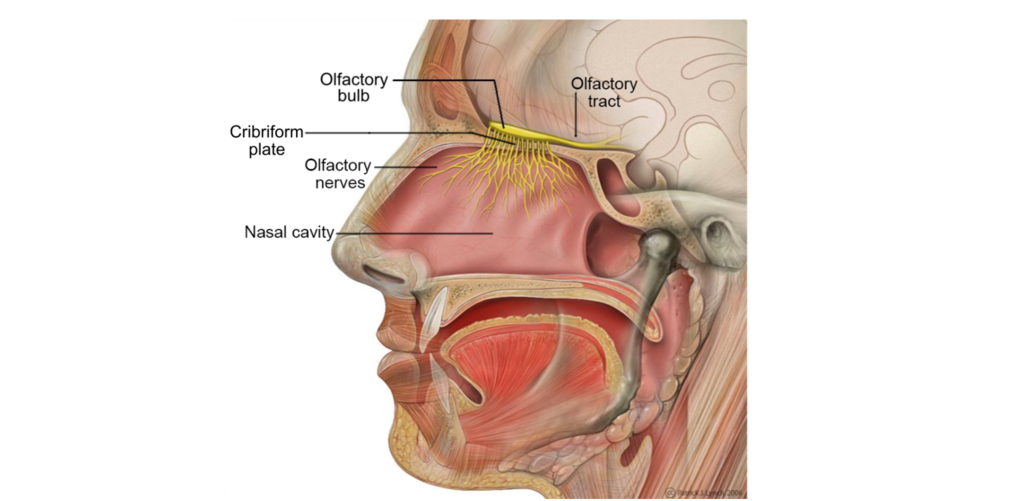
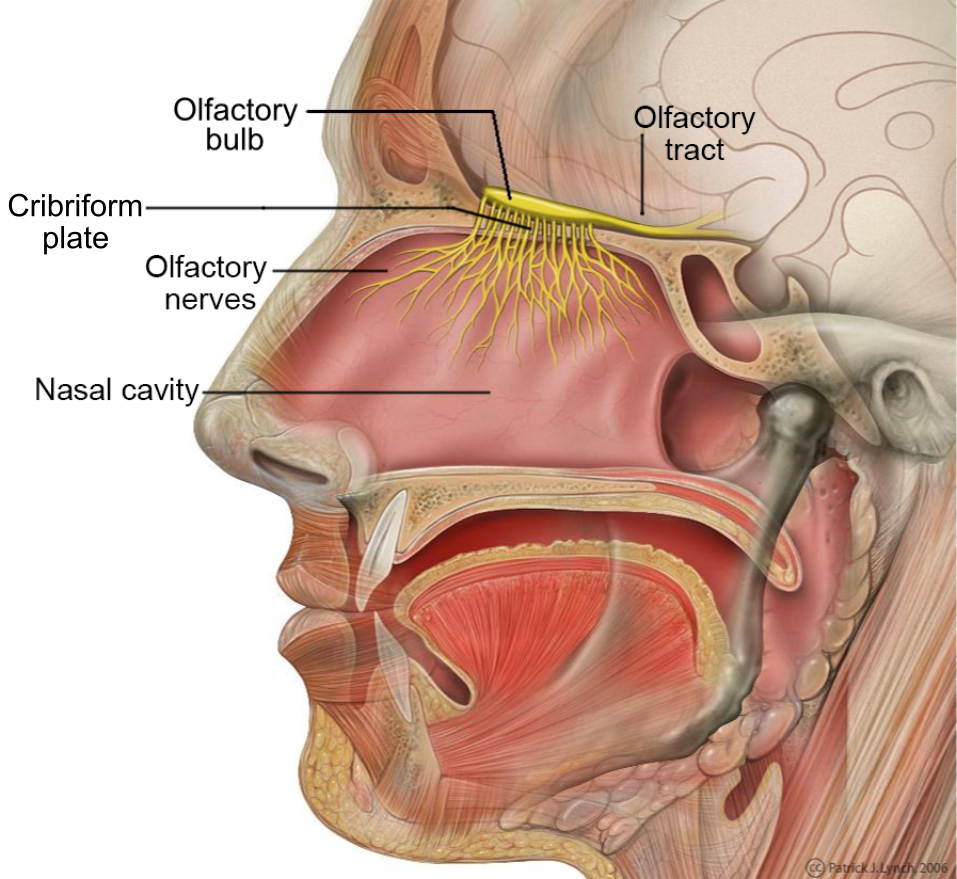
Your nose detects dangerous air before large volumes enter your lungs — a critical early-warning system with no mouth-breathing equivalent.

  • Smoke and fire hazards
  • Rotting or contaminated food
  • Toxic industrial chemicals
  • Gas leaks and other environmental hazards
Note: The mouth has no built-in air quality detection system. You are chemically blind when breathing through your mouth.[1,2]
References
  1. Buck & Axel, Cell, 1991 (PMID: 1840504; Nobel Prize 2004)
  2. Zelano et al., J Neuroscience, 2016 (PMID: 27927961)
Nasal blood vessels and airflow during exercise
05

Exercise & Athletic Performance

Nasal breathing during exercise isn't a limitation — it's a physiological advantage, especially in urban environments and endurance sport.

  • Filters urban pollutants — especially critical when running or cycling in towns and cities where particulate matter is elevated[1]
  • Reduces exercise-induced bronchoconstriction — warmed, humidified air reaching the airways dramatically lowers the risk of airway narrowing triggered by exertion[2,3]
  • Increases blood flow body-wide, including the brain — nasal nitric oxide dilates blood vessels systemically, improving circulation to muscles and cognitive centres[4]
  • Improves oxygen transfer from lungs to blood — NO-enhanced vasodilation maximises the surface area and efficiency of gas exchange in the alveoli[5]
  • Increases O₂ delivery from blood to tissues — the Bohr effect: CO₂ retained by nasal resistance causes haemoglobin to release oxygen more readily into working muscles[6]
  • Slows breathing for more efficient gas exchange — nasal resistance naturally reduces breathing rate, allowing longer, deeper breaths and better alveolar ventilation[7,8]
  • May reduce blood lactate buildup — nasal-only breathing at low intensity has been associated with modestly lower blood lactate concentrations late in exercise sessions, suggesting a shift toward more efficient aerobic metabolism[9]
  • Reduces upper respiratory infections — the filtration and humidification functions of nasal breathing help prevent pathogen and particulate inhalation at any exercise intensity, significantly lowering the risk of upper respiratory tract infections during training[10,11]
Bottom line: Mouth breathing feels easier because it bypasses all of these mechanisms. Train your nose and you train your performance.
References
  1. Schwab & Zenkel, Laryngoscope, 1998 (PMID: 9432080)
  2. Shturman-Ellstein et al., Am Rev Respir Dis, 1978 (PMID: 677559)
  3. Mangla & Menon, Clin Allergy, 1981 (PMID: 7318162)
  4. Lundberg et al., Acta Physiol Scand, 1996 (PMID: 8971255)
  5. Settergren et al., Acta Physiol Scand, 1998 (PMID: 9715735)
  6. Bohr, Hasselbalch & Krogh, Skand Arch Physiol, 1904
  7. Tanaka et al., J Appl Physiol, 1988 (PMID: 3141357)
  8. Morton et al., Aust J Sci Med Sport, 1995 (PMID: 8599744)
  9. Rappelt et al., Front. Physiol., 2023 (DOI: 10.3389/fphys.2023.1134778)
  10. Aydın et al., 2014
  11. Walker et al., 2016
06

Airflow Resistance & Control

The nose naturally creates airflow resistance — a feature, not a limitation.

References
  1. Rappelt et al., Front Physiol, 2023 (PMID: 37153227) — nasal-only breathing significantly lowers breathing frequency during exercise
  2. Trevisan et al., J Electromyogr Kinesiol, 2015 (PMID: 25837853) — nasal breathers show 19% greater diaphragmatic amplitude than mouth breathers
  3. Bohr, Hasselbalch & Krogh, Skand Arch Physiol, 1904
07

Immune Defense

The nasal cavity is a frontline immune surveillance organ that intercepts pathogens before they reach the lungs.

References
  1. Pilette et al., Eur Respir J, 2001 (PMID: 11589357)
  2. Brandtzaeg, Int J Pediatr Otorhinolaryngol, 2003 (PMID: 14662171)
  3. Holmgren & Czerkinsky, Nature Medicine, 2005 (PMID: 15812489)
08

Turbulent Airflow & Mixing

Nasal passages are geometrically shaped to create turbulent airflow, not the fast laminar flow of mouth breathing.

References
  1. Zhao et al., Chem Senses, 2004 (PMID: 15201204)
  2. Doorly et al., Respir Physiol Neurobiol, 2008 (PMID: 18786659)
09

The Nasal Cycle

Your nose automatically alternates dominant airflow between nostrils every 2–6 hours — a self-regulating recovery system.

References
  1. Eccles, Acta Otolaryngol, 1978 (PMID: 716867)
  2. Werntz et al., Human Neurobiology, 1983 (PMID: 6874437)
10

Cardiovascular & Recovery Benefits

Nasal breathing has measurable downstream effects on heart function, oxygen economy, and athletic recovery — going well beyond the airways themselves.

  • More oxygen extracted per breath
    The fraction of expired oxygen is lower with nasal breathing, meaning a greater proportion of inhaled O₂ is actually absorbed. A 2018 study in the Journal of Clinical Sleep Medicine found that nasal breathing during exercise reduces expired O₂ — confirming superior extraction efficiency compared to mouth breathing, likely due to longer alveolar residence time from slower, resistance-regulated flow.
  • Improves venous return to the heart
    Diaphragmatic breathing driven by nasal resistance creates a pressure differential in the thoracic cavity — acting like a pump that draws venous blood back toward the heart. This reduces cardiac workload and improves stroke volume. Mouth breathing with its shallow, upper-chest pattern loses this mechanical advantage almost entirely.
  • Prevents overtraining & adverse cardiovascular effects
    Chronic mouth breathing during training drives sympathetic nervous system dominance (fight-or-flight), elevating cortisol and keeping heart rate artificially high. Research by Nestor (2020, Breath) and McKeown documents that nasal-breathing athletes maintain lower resting heart rates, better heart rate variability (HRV), and recover faster — markers strongly associated with avoiding overtraining syndrome.
↑ HRV
Heart Rate Variability
marker of recovery capacity
↓ O₂exp
Less oxygen wasted
in exhalation
↓ HR
Lower resting heart rate
in nasal-breathing athletes
Research Note

"Even after professional cleaning and hygiene instruction, mouth-breathing adolescents developed four times more cavity-causing bacteria within six months than nasal breathers."

— Mummolo et al., Int J Environ Res Public Health, 2018 (PMID: 29373524)

Research Note

"Nasal inhalation entrains oscillations in piriform cortex, amygdala, and hippocampus. Participants showed faster fear discrimination and better object recognition memory during nasal inhalation versus exhalation — effects absent during mouth breathing."

— Zelano et al., Journal of Neuroscience, 2016 (PMID: 27927961)

11

Whole-Body & Cognitive Benefits

The effects of nasal breathing extend beyond the lungs — reaching oral health, brain function, and even making the habit self-reinforcing over time.

  • Conserves moisture → dental health & hydration
    The nasal mucosa recovers a substantial fraction of exhaled heat and moisture (estimates range from ~20–33% depending on conditions). Mouth breathing bypasses this, drying the oral cavity — evaporating the protective saliva film from tooth surfaces, dropping intraoral pH below the enamel-demineralisation threshold, and accelerating bacterial growth. Chronic mouth breathers show significantly higher rates of dental caries, gum disease, and gingivitis. Athletes who mouth breathe also lose substantially more fluid per hour, contributing to earlier dehydration and performance decline.
  • Enhances fear processing & memory consolidation
    A landmark 2016 study by Zelano et al. in the Journal of Neuroscience found that nasal inhalation directly entrains rhythmic electrical activity in the piriform cortex, amygdala, and hippocampus. Participants discriminated fearful faces faster and showed better object recognition memory when breathing through the nose vs. the mouth. The nasal inhalation cycle synchronises limbic oscillations that modulate emotional processing and memory consolidation — effects absent during mouth breathing.
  • Helps open the nose for easier breathing
    Nasal breathing is self-reinforcing. Regular nasal airflow stimulates the turbinate tissue to maintain healthy tone and function. Conversely, habitual mouth breathing causes the nasal passages to become increasingly congested over time as the mucosa hypertrophies from disuse. Gentle nasal breathing — even during light exercise — gradually reduces chronic congestion, making nasal breathing progressively easier. The nose, like a muscle, responds to use.
The habit loop: The more you breathe nasally, the easier nasal breathing becomes — and the harder it is to go back.

Nose vs. Mouth

A side-by-side comparison of breathing pathways

FunctionNoseMouth
Particle filtration
Air humidificationMinimal
Air warmingMinimal
Nitric oxide delivery
Airflow regulation
Immune defenseMinimal
Air quality detection
Nasal cycle recovery
O₂ extraction efficiencyLower
Venous return support
Overtraining prevention
Moisture conservation
Cognitive / memoryReduced
Self-reinforcing habit